


The Market Is Restructuring - This Is The Best Time To Take A Position.
Interview with Marina Chelak, Director of MiningWorld Russia
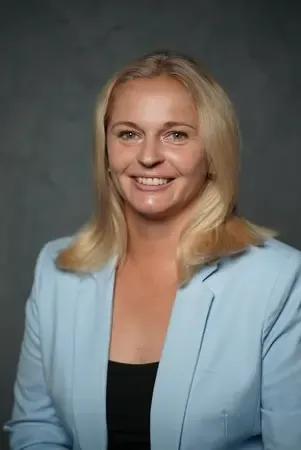
Marina, what do the results of the anniversary MiningWorld Russia 2026 say about the state of the industry?
They indicate that the industry is weathering the turbulence and continuing to invest in development and communications. According to the official independent audit, 10,354 specialists from 79 Russian regions and 34 countries participated, representing 89% of the country's regional coverage. With 515 participating companies from 16 countries and 202 new exhibitors, these figures indicate that nearly 40% of the exhibits have been updated.
The exhibition encompassed 12 thematic sections. The "Heavy Equipment Territory" exhibit was particularly revealing: 43 companies brought and displayed over 50 pieces of large-scale equipment. In a time when logistics have become significantly more complex, this is a strong signal that manufacturers are willing to invest in in-person customer interactions.
And the key indicator I highlight as a director is this: 80% of visitors came to the exhibition to find new products and services, and 67% came to find new suppliers. The audience doesn't come "to see," but to "find a solution." For manufacturers, this means direct access to solvent demand, without intermediaries.
What major changes have you seen in the MiningWorld Russia 2026 audience?
We truly pay special attention to this-not every organizer can boast of an in-house analytics department. Here are the trends we identified this year.
First, the demand structure is expanding. The visitor segment engaged in solid minerals mining remains one of the strongest (ranking in the top three). This means the exhibition remains valuable for companies focused on direct contact with mining companies.
But we also see a trend toward a broader audience, encompassing not only mining and processing but also engineering, infrastructure, and design activities. Visitors are also coming who are involved in the design and construction of mining facilities. This means that demand is growing not just for hardware, but for integrated solutions: equipment, design, and service. This opens up new opportunities for manufacturers working at the intersection of industries.
Secondly, the quality of the visitors. 14% of the total audience consists of senior management: CEOs, executive directors, and commercial directors.
The venue is attended by specialists who influence strategic and purchasing decisions. This year, the number of buyers attending was 3% higher than last year, and the number of those involved in operations at the mining site increased by 6%. The exhibition is consistently expanding its audience, which makes and directly influences decisions.
Third, geography. This year, visitors came to the exhibition from 79 regions of Russia, meaning we covered almost 89% of all regions in the country. The top five regions, in addition to the Moscow Region, were the Leningrad, Sverdlovsk, Chelyabinsk, Kemerovo, and Krasnoyarsk Regions. International visitors came from 34 countries, including China, Belarus, Kazakhstan, Turkey, and India, in addition to Russia.
The audience concentration from Moscow and the Moscow region increased, rising from 64.8% to 68.1%. There are also regions with positive dynamics – Novosibirsk, Kemerovo, and Yaroslavl regions, the Republic of Bashkortostan, and Perm Krai – with more visitors from these regions this year than last. The national audience declined slightly (by 0.5% compared to last year), but the national reach remains.
Furthermore, an excellent indicator is that 51% of the attendees did not attend last year's exhibition. This means we continue to attract new audiences, which means the market is not saturated, and new faces with new demands are coming to the exhibition.
Why do you think the current market situation opens up new opportunities?
According to the Federal State Statistics Service and Tebiz Group, the Russian mining equipment market will have fallen by 30% in volume terms by 2025, with production down 29% and imports down 21%. Meanwhile, exports increased by 1%. Production exceeded imports by 127 times. It appears the market is moving toward strict localization. And these figures signal profound structural changes. A 30% decline is significant. But let's view this not as a crisis, but as a reset.
When a market declines and imports shrink, entire niches become vacant. As some players leave, others enter. Yes, production has exceeded imports by 127 times, but the key question is: whose production? Growing localization doesn't mean all needs are met. It means there's emerging market demand for new technological solutions, spare parts, components, and service-things that were previously imported but now require replacement.
And here's the most interesting part. We analyze visitor interest in each of the exhibition's 12 sections to understand where the focus is shifting. In 2026, we recorded an increase in interest in two key sections: "Spare Parts, Components, and Related Materials"-up 7% compared to 2025-and "Engineering, Design, and Service"-up 4%.
This isn't a fluke or a one-time spike. The growing interest in spare parts and engineering is a long-term consequence of market restructuring: the loss of some suppliers continues to push companies to seek new supply channels and comprehensive design solutions. And MiningWorld Russia is a key meeting point for this supply and demand.
Look who chose MiningWorld Russia in 2026: Kopeysk Machine-Building Plant JSC , a revenue leader and flagship manufacturer of mining systems; Anzheromash OJSC , a long-standing manufacturer specializing in the design, manufacture, and repair of mining equipment; and Sibelektro LLC , a key player in the mining electrical equipment niche, focusing on deep localization of critical components, replacing departing Western suppliers.
These aren't just exhibitors-they're flagships of Russian industry, and they've chosen MiningWorld Russia as the venue to present their new solutions. As you can see, these companies are constantly evolving, and we're confident they'll have something to showcase at next season's exhibition.
It's precisely during difficult economic periods that the market restructures most dynamically. Those who act now, strengthening their positions, will be hard to catch up with later.
What is the main difference between MiningWorld Russia and other industry exhibitions?
Our key differentiator is a precise industry focus with maximum breadth of coverage. We don't blur our positioning. MiningWorld Russia is a trade show specifically about mining. At the same time, we cover the entire value chain: equipment for open-pit and underground mining, enrichment, transportation, IT and automation, service, and industrial safety-12 thematic sections that cater to every participant, regardless of their specialization.
A distinct advantage is its location. MiningWorld Russia is held in Moscow. It's a decision-making center: approximately 100 mining and metals companies are registered there, including Norilsk Nickel, Alrosa, Polyus, Metalloinvest, EVRAZ, and others. Moscow also boasts a well-developed infrastructure: it's easier to get here from any region and any country than remote industrial centers. Participating in the exhibition in Moscow provides national, rather than local, coverage and is perceived by the market as a sign of a company's serious intentions.
How is MiningWorld Russia evolving to stay relevant to the industry?
We are consciously transforming ourselves from an annual event into a year-round industry ecosystem. The exhibition is the core, but something new is forming around it.
In 2026, we launched MiningWorld Connect -a digital business community for mining professionals that allows exhibitors and visitors to stay connected, expand business contacts, and engage in dialogue 365 days a year. It's an industry-focused environment where customers and suppliers connect, regardless of the exhibition date.
In addition, we are developing the MiningWorld Summit -a dedicated platform for in-depth discussions and the search for strategic solutions.
We're giving participants not just three days of booth space, but a tool for year-round presence in the industry.
We're also improving the exhibition's business program. For example, in 2026, five new events were held for the first time: from cybergeology and the application of neural networks in mining to a roundtable discussion on commerce and marketing in the mining industry. This demonstrates that we're not simply "providing exhibition space" but shaping the industry's intellectual agenda.
We are incorporating analytical findings into exhibition development. For example, the 2026–2027 strategy includes a focus on developing the "Spare Parts, Components, and Related Materials" sector, as it is the most popular among visitors.
What advice would you give to companies currently deciding whether to participate in MiningWorld Russia 2027?
Let me be clear: the best time to make a decision is now. The MiningWorld Russia 2027 exhibit is already being assembled, and we're still looking for a convenient location and format for participation. We're working on promoting our exhibitors from the start: the basic participation package already includes news coverage on the exhibition website, mentions in news digests distributed to the entire visitor database, and inclusion in the online and printed exhibitor catalogs. This is a proven promotional tool that begins well before the exhibition opens.
The market is reshaping itself, niches are opening up, and positions of departed players are being vacated. Come while you still have options-and before your competitors take your place. Opportunities wait for no one.